
In this series we will look at the pose Downward-Facing Dog, or Adho Mukha Svanasana, in five different relationships to gravity. Shifting the orientation of a pose can shift our perspective on the work of that pose. In each orientation, the force of gravity acts on our body in a different way: assisting and challenging different aspects of the pose. What does each relationship to gravity teach you about the pose?
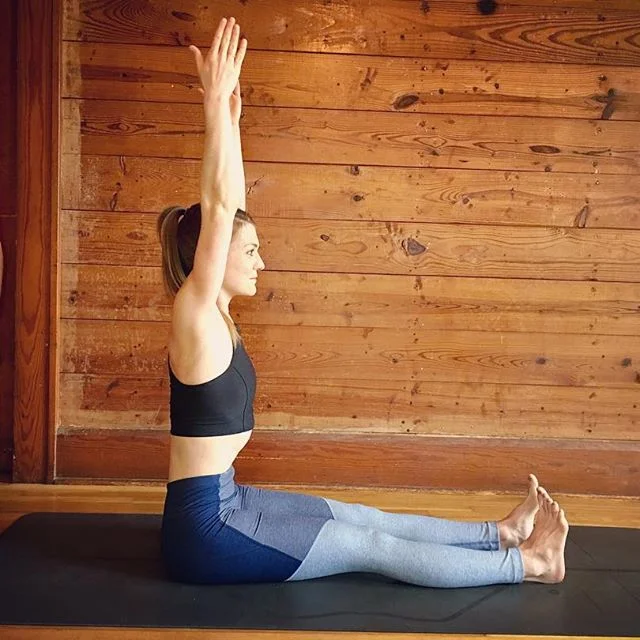
Version 1: Seated Dog
In this seated version of Downward Dog, the force of gravity acts downward on the top thighs, helping us to root them into the earth. The feedback from the ground reminds us to roll onto the tops of our sitting bones, and reach them down into the ground away from our hands. We can then use this firm rooting of the lower body, to actively reach our upper body away from: using the strength of the arms to pull the entire torso up off of the pelvis, lengthening the spine and making the side waist longer.
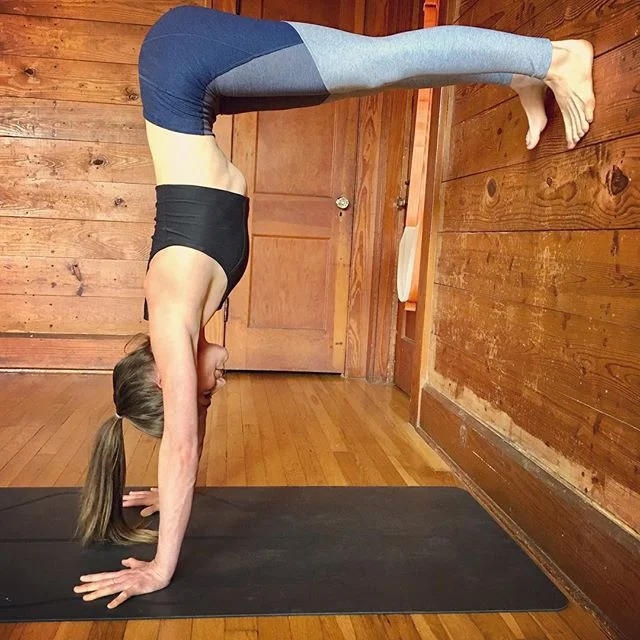
Version 2: Upside-Down Dog
In this version of Downward Dog the body is in exactly the opposite relationship to gravity than in Version 1 (Seated Dog). While as before the force of gravity helped us ground down through the legs and pelvis, here gravity is helping us root down strongly through the arms and hands. And instead of using our arms to lift the ribs up away from the pelvis, here we resist the force of gravity by pressing up vigorously with our top thighs, using the strength of the legs to lift the weight of the pelvis up off of the arms and shoulder girdle. Because of the location of our center of gravity in this pose, a tremendous amount of core strength is also required here to stabilize and maintain the curves of the spine.
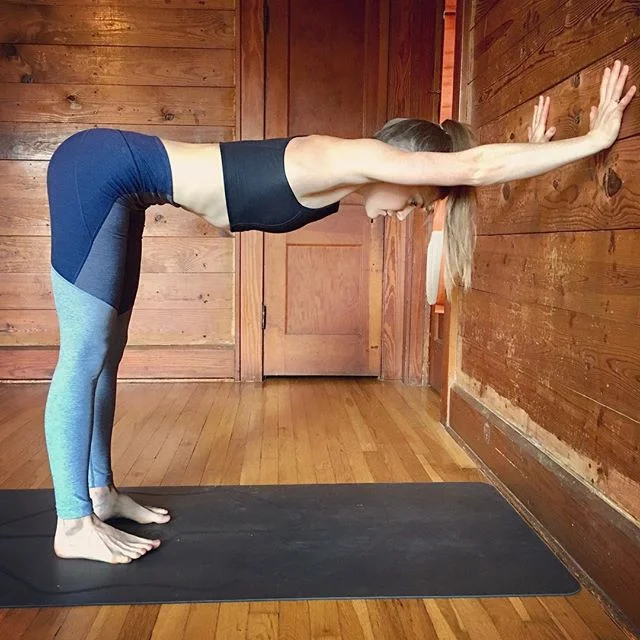
Version 3: Wall Dog
This version of Downward Dog differs from Versions 1 and 2 in that our upper body is now parallel to the floor. So instead of lengthening the spine against the force of gravity, here we can combine what we learned in the previous two poses and work to lengthen the spine in both directions simultaneously. The hands reach away from the pelvis, pressing vigorously into the wall (as in Seated Dog), and the top thighs press back strongly, reaching the sitting bones away from the hands (as in Upside-Down Dog). Because here the force of gravity works to ground the weight of the pelvis down into the feet and legs, this pose teaches us how to utilize the strength of the legs as a powerful tool for elongating and decompressing the spine.
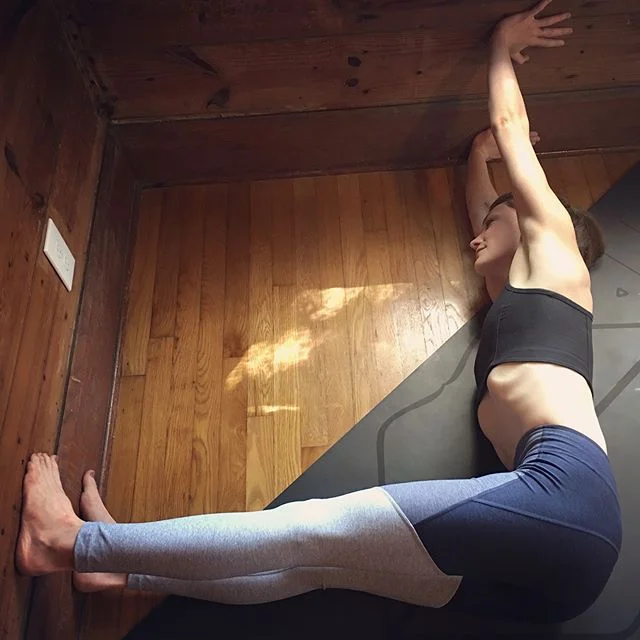
Version 4: Side-Lying Dog
In this version of downward dog, the force of gravity acts on a different plane of our body. Because of our orientation to the floor, gravity encourages us to collapse the top side waist and let the bottom waist sag to the floor. To resist the effect of gravity here, we learn to root the top foot strongly into the wall as we reach the top thigh and hip away from the top shoulder. This lengthens the top side waist and lifts the bottom waist up away from the ground. (Because of this asymmetrical action, this pose should be practiced on both 'sides'.)
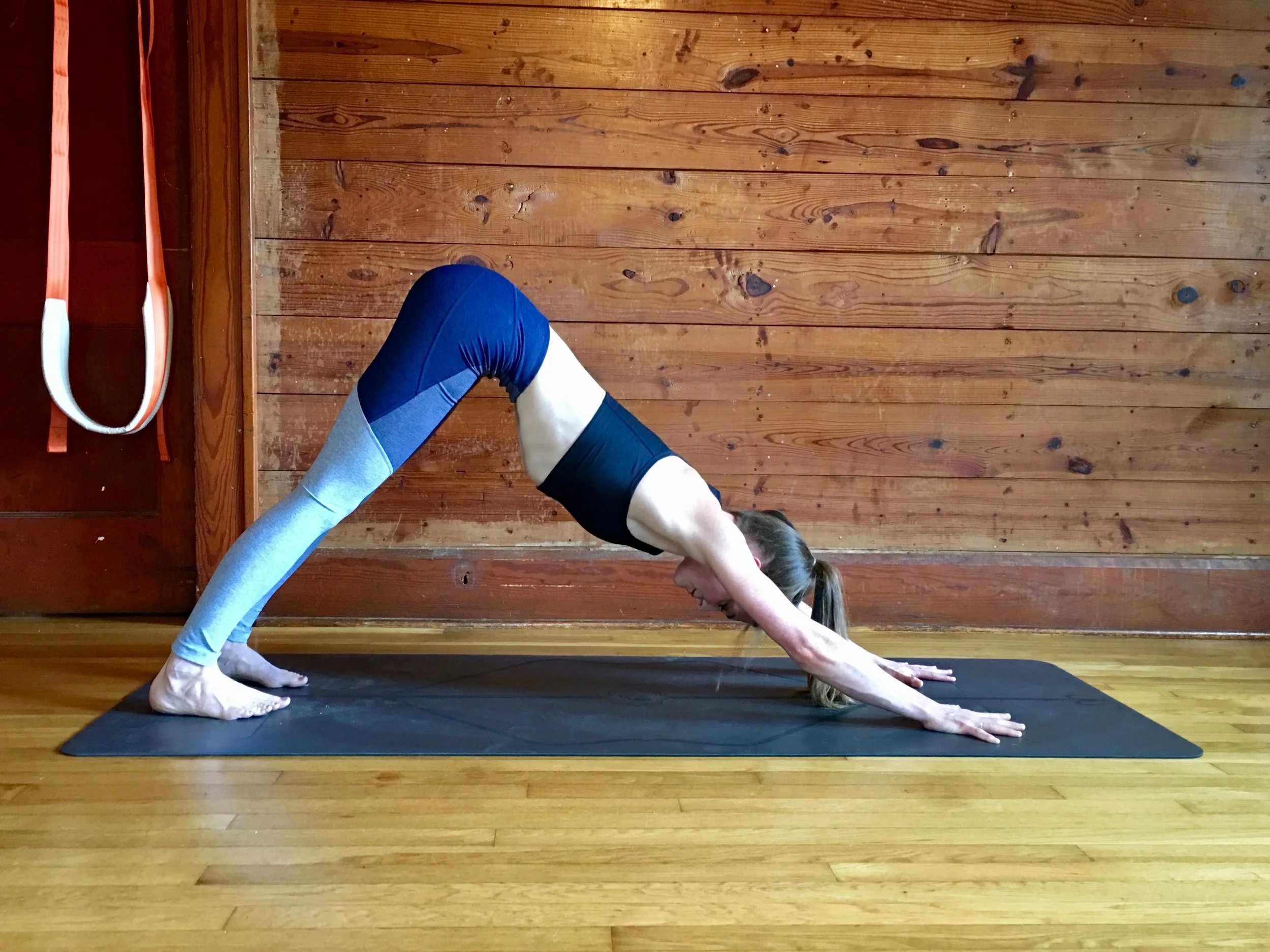
Version 5: Adho Mukha Svanasana
Now, in traditional Downward Dog we can apply everything we learned from Versions 1-4.
From Version 1, Seated Dog, we remember rolling onto the tops of the sitting bones and using the arms to reach the ribs up away from the pelvis. We recreate these same actions here by rolling the pelvis over the thighbones and reaching the sitting bones up away from the hands, as we vigorously press the hands down into the mat.
We also feel the echo of Version 2, Upside-Down Dog, here as we mightily press the top thighs back, pulling the weight of the pelvis up off the arms and shoulder girdle. And we recall from Version 3, Wall Dog, feeling our feet firmly planted in the ground, helping us access the power in the legs necessary to pull the pelvis away from the hands. From Version 4, Side-Lying Dog, we remember to mightily reach both greater trochanters/top hips away from the shoulders (maximally and evenly lengthening both side waists).
And most importantly, we remember to breathe (and always be curious!).